
Venezuela mobilizes 200,000 troops and air defenses in response to possible U.S. air strikes.
Venezuela has mobilized close to 200,000 soldiers for a nationwide military exercise and released footage of Russian-supplied systems, including a modernized ZU-23-2 and the TOR-M2E mobile surface-to-air missile unit. The display signals a more assertive air defense posture that U.S. officials will monitor closely in the Caribbean region.
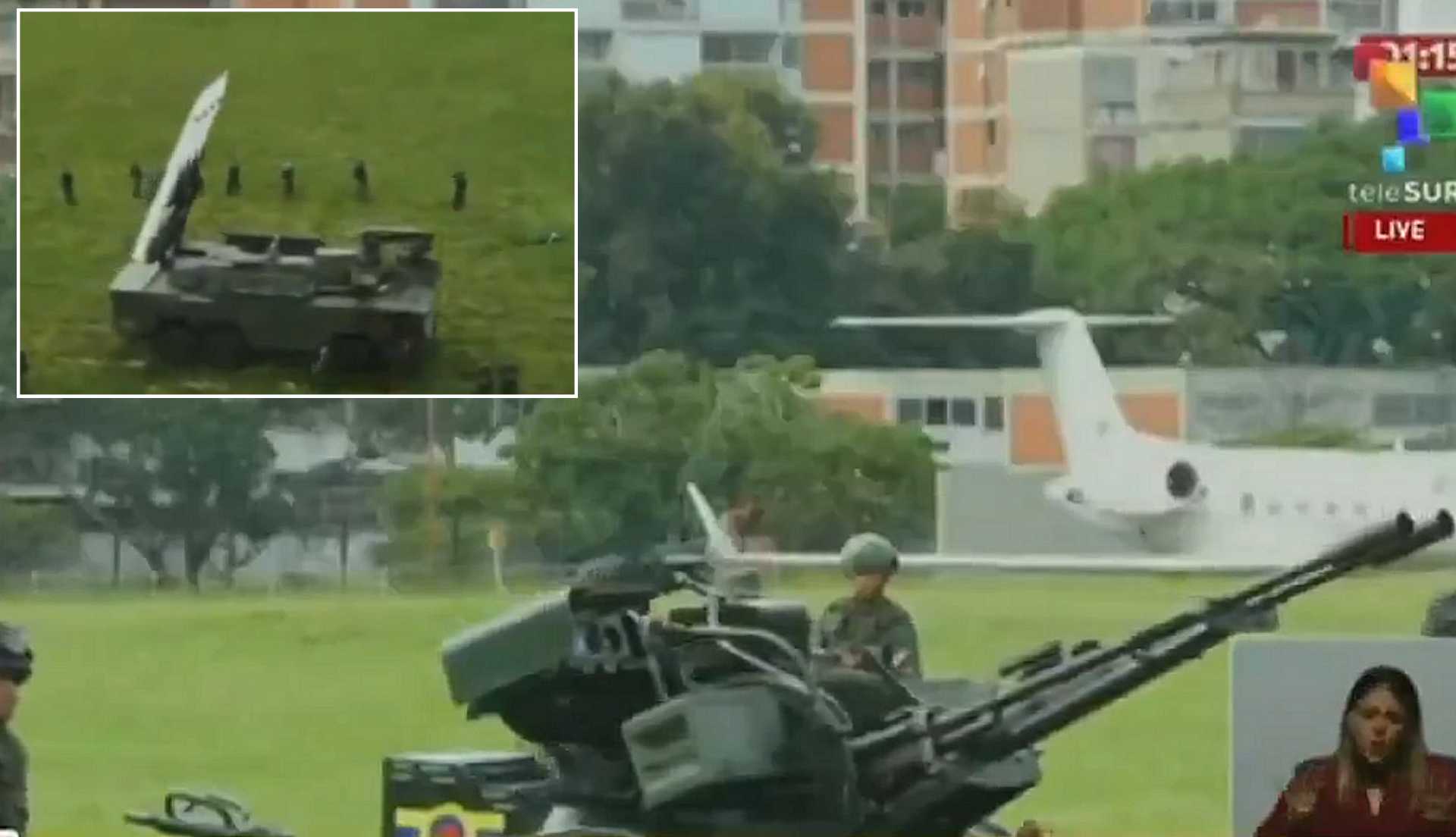
Venezuela has launched one of its largest military drills in years, with state broadcaster Telesur reporting on 13 November 2025 that about 200,000 troops have been mobilized nationwide. Newly released footage shows the use of Russian-supplied air defense assets, notably an upgraded twin-barrel ZU-23-2 anti-aircraft gun and the TOR-M2E short-range air defense missile system, both of which add new flexibility to Venezuela’s layered air defense network. Caracas describes the exercise as defensive, but the scale and visibility of modern mobile SAMs are likely to draw close attention from U.S. forces operating in and around the Caribbean.
Venezuelan air defense forces deploy modernized ZU-23-2 twin-barrel anti-aircraft guns alongside TOR-M2E missile systems during large-scale military exercises in November 2025, showcasing upgraded short- and medium-range capabilities near the Caribbean coast. (Picture source: footage from Telesur)
The visual material, captured on the ground during the exercise, highlights not only the sheer scale of the mobilization but also Venezuela’s increasing reliance on Russian technology to strengthen its strategic posture. While details remain scarce from official Venezuelan sources, the video confirms a coordinated, nationwide deployment of both personnel and high-value military assets.
This mass mobilization of 200,000 troops, if verified, would represent the largest Venezuelan military exercise in more than two decades and signals a shift from sporadic unit-level training to fully integrated combat readiness. Notably, the timing coincides with recent U.S.-led maritime operations in the Caribbean Sea aimed at dismantling transnational drug trafficking networks. This suggests the drills could be intended as a show of force in response to perceived encroachment near Venezuelan waters.
The modernized ZU-23-2 showcased in the footage appears to be an upgraded version fitted with optical and radar fire-control systems, electric servo drives for improved aiming speed, and digital targeting integration compatible with Venezuela’s mobile defense platforms. These enhancements bring the 1960s-era system closer to modern standards, enabling it to counter low-flying aerial threats such as unmanned aerial vehicles and helicopters in close-range engagements. Additionally, some platforms appear to be mounted on 4×4 or 6×6 tactical trucks, enhancing mobility and survivability.
The TOR-M2E air defense missile system observed is part of the latest export variant supplied by Russia, featuring an advanced phased-array radar capable of detecting and tracking up to 48 targets simultaneously and engaging up to four threats at once. The TOR-M2E’s missile-intercept envelope extends to 15 kilometers and 10,000 meters, providing a capable counter to cruise missiles, drones, and fixed- or rotary-wing aircraft. Crucially, the system’s autonomy allows it to operate independently of centralized command structures, making it a potent asset for layered, mobile air-defense.
The presence of these systems indicates Venezuela’s continued effort to build a credible anti-access and area-denial capability with external assistance from Moscow. Over the past five years, Caracas has received various Russian defense packages, including Buk-M2E and Pantsir-S1 batteries, to bolster national airspace security and deter foreign military intervention.
Analysis by the Army Recognition editorial team confirms that the configuration and deployment of TOR-M2E units observed in the footage demonstrate an attempt to replicate the layered air defense concepts used by the Russian military in conflict zones like Syria and Ukraine. Venezuela appears to be adapting that model by integrating short- and medium-range air defense assets into mobile formations that can protect key infrastructure and command centers from potential aerial incursions.
While the 200,000 figure remains unverified by independent observers, the visible troop concentration and scale of deployed assets lend credibility to the government’s claims. Venezuela’s defense ministry has framed the drills as a “defensive readiness measure,” while also emphasizing sovereignty and deterrence, language often associated with countering perceived U.S. pressure or regional destabilization.
In strategic terms, this exercise occurs amid a renewed U.S. focus on joint multinational operations in the Caribbean, officially aimed at dismantling organized narcotrafficking. In early November, the U.S. Navy deployed a task group, including Arleigh Burke-class destroyers and P-8A Poseidon aircraft, as part of Operation Sentinel Tide, a new anti-cartel maritime security campaign involving Colombia, the Dominican Republic, and several Dutch Caribbean territories. Venezuela has condemned such moves as provocations and violations of regional balance, raising tensions over maritime airspace boundaries and freedom of navigation.
For the Maduro regime, the exercise is as much a political statement as a military one. It demonstrates internal control, signals alliance cohesion with Russia, and projects a strong deterrent message to both regional neighbors and Washington. As one Venezuelan commander quoted on state media put it: “The motherland is on permanent alert.”
For the United States and its regional allies, this development adds complexity to operational planning. The inclusion of mobile air-defense systems like the TOR-M2E and the modernization of existing gun-based defenses suggest Venezuela could contest U.S. airspace superiority in low- to mid-altitude bands near its territory. Military planners must now assess how the evolving threat environment could impact intelligence-gathering flights, naval operations, or contingency scenarios involving non-combatant evacuation or humanitarian corridors.
The move also places Venezuela squarely within Russia’s hemispheric strategy. By establishing advanced air-defense outposts in a partner country within reach of U.S. Southern Command’s area of responsibility, Moscow extends its influence and complicates America’s traditional strategic depth in the Western Hemisphere.
Nonetheless, questions remain about the sustainability and depth of this capability. Venezuela continues to face severe economic constraints, with reports of limited maintenance budgets and poor equipment serviceability. Whether the displayed systems are combat-ready in a sustained engagement remains unconfirmed. Furthermore, the degree of operational integration among air-defense crews, radar operators, and the broader command-and-control infrastructure is unclear.
Equally ambiguous is the provenance of the ZU-23-2 upgrades. It remains unclear whether these enhancements were supplied directly by Russia, undertaken by Venezuela’s own defense industry, or sourced via third-party contractors. Some analysts suggest that Iran or Belarus may have played roles in upgrading legacy platforms, given recent defense cooperation agreements.
In summary, Venezuela’s latest drill is a calibrated signal: domestically designed to project strength and unity, regionally intended to deter, and globally aimed at reaffirming alignment with Russia in a multipolar strategic environment. The real question is whether this new posture translates into lasting, credible deterrence or whether it is an elaborate display masking deeper structural weaknesses. Either way, it compels attention. The Caribbean theater is no longer a low-threat environment.
Written by Alain Servaes – Chief Editor, Army Recognition Group
Alain Servaes is a former infantry non-commissioned officer and the founder of Army Recognition. With over 20 years in defense journalism, he provides expert analysis on military equipment, NATO operations, and the global defense industry.